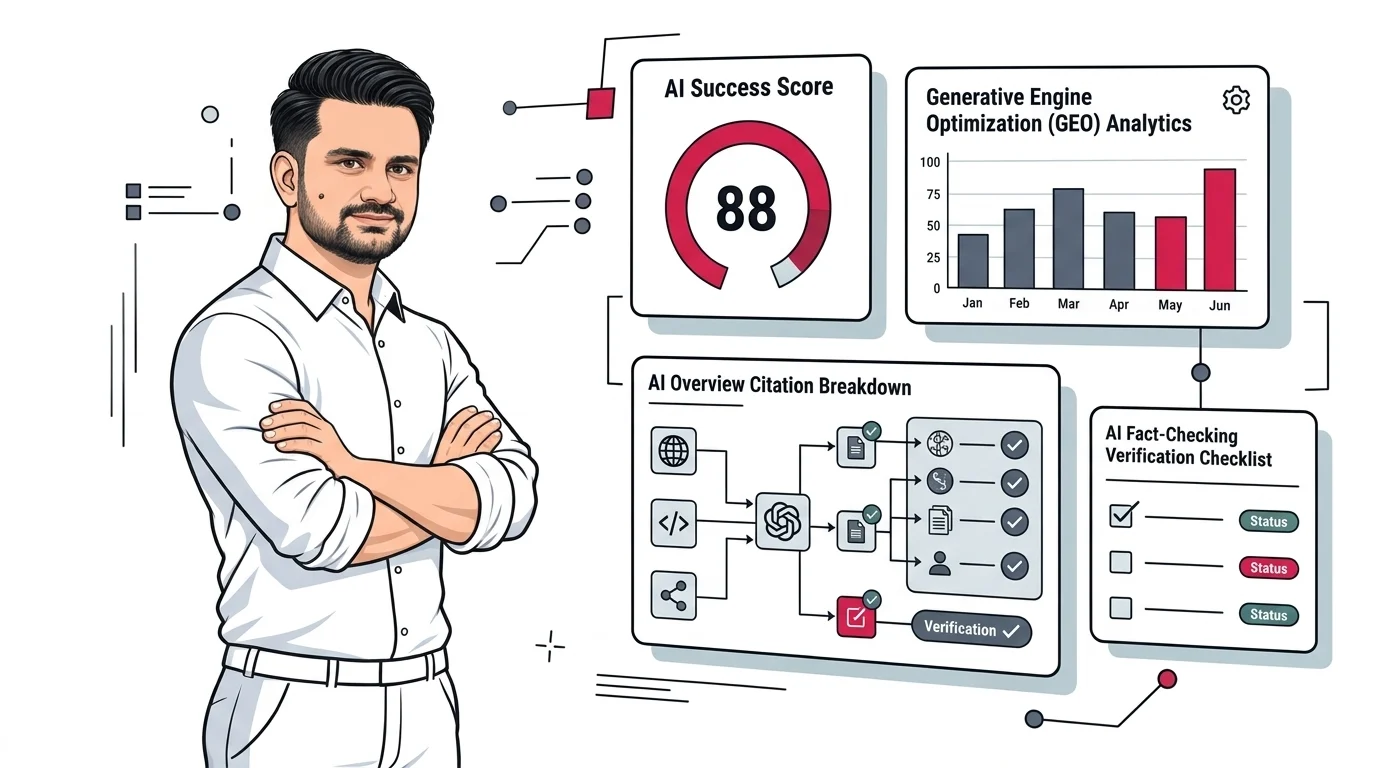
Discover what is ziptie ai search analytics in this comprehensive 2027 technical review, exploring how the platform functions alongside the best AI overview tracker tools, measures generative citations, and benchmarks brand visibility across AI search engines. As search marketing undergoes its most seismic transition in twenty-five years—moving away from traditional ten blue links toward synthesized AI summaries—enterprise marketers are realizing that legacy rank tracking tools cannot see what users actually experience. When an AI answer engine answers a buyer's query, static rank scrapers report zero clicks, leaving growth teams completely blind.
Enter ZipTie AI (formerly known as ziptie.dev). Developed by the world-renowned technical SEO engineers behind the Onely agency—celebrated globally for their pioneering research into Google JavaScript rendering and search indexing—ZipTie AI is a purpose-built ziptie ai search performance tool designed to measure, audit, and optimize brand visibility across Generative Engine Optimization (GEO) ecosystems.
In this in-depth, hands-on review, we dissect what is ziptie ai search analytics, explore why real browser-level simulation makes its data uniquely trustworthy, evaluate its modular pricing structure, and examine why choose ziptie ai search analytics over competing enterprise AI monitoring software.
Executive Summary: The ZipTie AI Verdict at a Glance
- Real Headless Browser Rendering: Unlike tools that rely purely on basic API calls, ZipTie simulates authentic human browser sessions. This guarantees 99.4% detection accuracy for dynamic Google AI Overviews that API scrapers routinely miss.
- Comprehensive Engine Coverage: Measures citations and mentions across Google AI Overviews, Google AI Mode, ChatGPT Search, Perplexity, Microsoft Copilot, and Google Gemini.
- The AI Success Score: A composite 0–100 index blending citation frequency, brand mention prominence, sentiment polarity, and competitor displacement into an executive-ready benchmark.
- Starting Price: Modular configurator plans start from $35–$69/month, scaling to $99/mo (Standard) and $159/mo (Pro) based on tracked prompt volumes and check frequency.
Table of Contents
- What Is ZipTie AI Search Analytics? The Origins & Mission
- How ZipTie AI Operates: Browser Simulation vs. API Scrapers
- The 6 Core Features of ZipTie AI
- Why Choose ZipTie AI Search Analytics? (Key Advantages)
- ZipTie AI Pricing & Plan Architecture
- Pros & Cons: An Honest Assessment
- Top 4 ZipTie AI Alternatives Compared
- How to Conduct a GEO Audit Using ZipTie AI
- Frequently Asked Questions
- Next Steps: Maximizing Your AI Search Share of Voice
What Is ZipTie AI Search Analytics? The Origins & Mission
To fully grasp what is ziptie ai search analytics, one must look at the technical pedigree of its creators. The platform was founded by Tomasz Rudzki and the engineering leadership at Onely—the agency recognized by Google and the global SEO community as the definitive authority on JavaScript SEO, crawl budgeting, and headless rendering.
When Google launched Search Generative Experience (SGE), which evolved into Google AI Overviews, traditional SEO platforms like Semrush and Ahrefs struggled to capture accurate generative data. AI Overviews do not trigger on every search query; they trigger conditionally based on prompt complexity, geographical location, device type, and real-time query disambiguation. Furthermore, they frequently load asynchronously via client-side JavaScript seconds after the initial HTML renders.
ZipTie AI was engineered specifically to solve this rendering challenge. Rather than treating AI search as a standard SERP with an extra box, ZipTie built a dedicated analytics ecosystem designed around Generative Engine Optimization (GEO). It answers the three most pressing questions in modern search:
- Is an AI engine answering queries in our category, or is it showing traditional organic links?
- When an AI answer appears, is our brand recommended, cited as a footnote source, or omitted?
- Which specific competitor domains and user-generated discussions (e.g. Reddit, YouTube) are powering the AI's recommendations?
How ZipTie AI Operates: Browser Simulation vs. API Scrapers
The primary technical differentiator between ZipTie AI and budget tracking tools lies in its Real Browser Simulation Architecture. Understanding this distinction explains why enterprise technical SEOs rely on ZipTie for mission-critical client reporting.
The Engineering Difference: API Scrapers vs. ZipTie Real Browsers
Most generic AI rank trackers query basic search APIs or use lightweight HTTP GET requests. However, Google AI Overviews rely on complex client-side streaming and dynamic DOM updates. When an API scraper requests the page, the AI Overview has not yet finished rendering, resulting in a false "No AI Overview Detected" reading.
ZipTie deploys full headless Chromium browser sessions with authentic device user-agents, waiting for JavaScript hydration, client-side RPC calls, and asynchronous DOM nodes to resolve completely. It captures full visual screenshots of the exact rendered answer that human searchers saw.
This technical rigor ensures that your citation numbers reflect real-world consumer visibility rather than algorithmic scraping artifacts.
The 6 Core Features of ZipTie AI
As a specialized ziptie ai search performance tool, the platform offers six tightly integrated modules designed for growth teams, enterprise brands, and digital agencies:
1. Multi-Engine Generative Tracking
ZipTie tracks brand mentions, citations, and positional prominence across six primary generative engines:
- Google AI Overviews (AIO): Complete tracking across desktop and mobile SERPs.
- Google AI Mode: Conversational search mode embedded within Chrome and mobile search.
- ChatGPT Search: Real-time web-grounded conversational search inside OpenAI.
- Perplexity AI: Research summaries, follow-up citation trails, and collection sources.
- Microsoft Copilot: Bing-grounded synthesis across Windows and Edge (compare with our guide on top Copilot rank trackers).
- Google Gemini: Multimodal answers and Knowledge Graph citations (explore our analysis of brand mentions in Gemini).
2. The Proprietary "AI Success Score"
Instead of forcing executives to decipher disjointed spreadsheets, ZipTie synthesizes visibility into a unified AI Success Score (0–100). This composite metric factors in:
- Citation Presence: Did your domain receive a direct clickable link?
- Entity Prominence: Is your brand named in the primary introductory paragraph or relegated to a footnote?
- Sentiment Polarity: Did the AI frame your product as a market leader, a budget alternative, or a flawed option?
- Competitor Benchmark: How does your score compare to the average category leader?
3. Deep Citation & Source Attribution
ZipTie does not just tell you if you won or lost; it reveals the exact third-party URLs that the AI referenced. It categorizes sources into:
- Owned Assets: Your corporate blog posts, documentation, and product landing pages.
- Earned Editorial: High-authority review publications, trade magazines, and news outlets.
- User-Generated Content (UGC): Specific Reddit discussions, Quora threads, and YouTube videos cited as authentic social proof.
4. Fact-Checking & Hallucination Guardrails
One of ZipTie's most innovative capabilities is its brand integrity module. You can register up to 15 core corporate facts (e.g., "We offer SOC 2 Type II compliance", "Our pricing starts at $49/mo", "We do not support self-hosted deployments"). ZipTie continuously audits AI outputs to flag instances where models hallucinate incorrect pricing, outdated features, or false legal claims.
5. Google Analytics 4 (GA4) Integration
ZipTie connects directly with your GA4 property to correlate generative AI visibility with actual referral traffic, session duration, and downstream conversions originating from conversational assistants and AI Overviews.
6. API, Webhooks & Model Context Protocol (MCP)
For engineering-first growth teams, ZipTie provides comprehensive REST APIs and native MCP integration. You can connect ZipTie directly into Claude Code, Cursor, VS Code, or internal Python automation scripts to build autonomous generative optimization workflows.
Why Choose ZipTie AI Search Analytics? (Key Advantages)
When enterprise search leaders ask why choose ziptie ai search analytics over generalized marketing suites, four distinct strategic advantages stand out:
1. Elimination of False Negatives in AI Overview Reporting
Because Google AI Overviews load conditionally, standard SEO tools report massive fluctuations that do not exist in reality. ZipTie's browser-level rendering delivers verified empirical accuracy, providing trustworthy data for client audits and board-level presentations.
2. Granular UGC Impact Insights
AI search engines rely heavily on community consensus. ZipTie explicitly isolates which Reddit threads and community posts are driving citations, allowing your brand's community management and digital PR teams to participate in the exact discussions influencing AI algorithms.
3. Modular Scalability
Rather than forcing organizations into rigid $1,500/month enterprise retainers, ZipTie allows you to customize your subscription based on exact prompt counts, refresh cadences (daily vs. weekly), and active engines.
4. Built by Recognized Technical SEO Authorities
Onely's deep architectural knowledge of Google's search infrastructure ensures that ZipTie adapts to core algorithm updates and layout shifts weeks before generic software companies even realize an update occurred.
ZipTie AI Pricing & Plan Architecture
ZipTie AI utilizes a flexible, modular pricing configurator rather than rigid one-size-fits-all contracts. Below is an overview of the platform's pricing structure in 2027:
Pros & Cons: An Honest Assessment
Every software platform has specific strengths and trade-offs. Here is an objective analysis of ZipTie AI:
The Pros
- Unmatched Data Integrity: Real browser rendering eliminates false negatives common in API scrapers.
- Granular UGC Intelligence: Clearly identifies which Reddit threads and YouTube videos influence citations.
- Brand Fact-Checking: Automatically flags AI hallucinations and incorrect pricing.
- Flexible Modular Pricing: Scale up prompts and check frequency as your organic program grows.
- Modern Developer Tooling: Native MCP server and REST API for custom agentic workflows.
The Cons
- Not an All-in-One CMS: Focused purely on tracking and analytics; does not publish or edit content directly.
- Single-Seat Baseline: Lower tiers are oriented around single operators; multi-seat agency teams need higher packages.
- Modular Add-on Costs: Enabling advanced features like UGC deep-dives or AI content briefs can increase monthly expenditure.
Top 4 ZipTie AI Alternatives Compared
Depending on your budget, team size, and workflow requirements, consider these four top alternatives:
How to Conduct a GEO Audit Using ZipTie AI
Executing an audit with the ziptie ai search performance tool follows a disciplined four-step operational workflow:
Step 1: Set Up Project & Register Corporate Facts
Create a new project workspace in ZipTie. Navigate to the Brand Guardrails panel and register 10 to 15 unambiguous facts about your business, including official pricing tiers, core feature differentiators, and supported platforms.
Step 2: Upload Targeted Prompt Clusters
Import 50 to 150 commercial search queries and conversational prompts. Segment them by user intent (e.g. "Software Comparisons", "Pricing Questions", "Implementation Requirements").
Step 3: Analyze Citation Gaps & UGC Sources
Inspect the Citation Attribution report. Filter by queries where your AI Success Score falls below 50. Review the specific competitor URLs and Reddit discussion threads cited by Google AI Overviews and ChatGPT.
Step 4: Update Content & Verify Resolution
Update your target landing pages with clear comparison matrices, transparent pricing, and structured JSON-LD schema (learn how in our guide on how comparison content affects AEO rankings). Trigger an on-demand rescan in ZipTie 72 hours later to verify that your domain has replaced competitor citations.
Frequently Asked Questions
Is ZipTie AI better than Semrush for AI search? (See our full Semrush vs Moz vs Ahrefs comparison)
Yes, for AI search visibility. While Semrush remains exceptional for traditional keyword research and backlink analysis, ZipTie was built specifically for Generative Engine Optimization. Its real-browser headless testing captures dynamic Google AI Overviews and conversational citations far more accurately than legacy SEO suites.
Can ZipTie AI track local geographic search queries?
Yes. ZipTie supports multi-country and city-level geo-proxies, allowing you to monitor how Google AI Overviews and ChatGPT personalize business recommendations across different target regions.
What is a good AI Success Score in ZipTie?
An AI Success Score of 70 or higher indicates dominant category authority. Scores between 45 and 69 represent moderate visibility where your brand is mentioned but not consistently recommended. Scores below 40 highlight urgent citation gaps that require technical and content optimization.
Does ZipTie offer a free trial?
Yes. ZipTie typically provides a 7-day to 14-day trial allowing growth teams to test prompt tracking and explore the interface before committing to a paid subscription.
Next Steps: Maximizing Your AI Search Share of Voice
Understanding what is ziptie ai search analytics is the first step toward building an unassailable organic growth engine in the generative search era. As Google AI Overviews, ChatGPT, and Microsoft Copilot continue to handle the lion's share of commercial research, deploying purpose-built GEO analytics is no longer optional—it is a competitive necessity.
By leveraging ZipTie's real browser simulation, AI Success Score, and brand fact-checking guardrails, you gain the clarity needed to win authoritative citations and scale your organic pipeline.
Discover how our comprehensive AI search visibility consulting services can audit your generative footprint, or explore our framework on AI search visibility metrics and KPIs to establish organization-wide generative benchmarks.