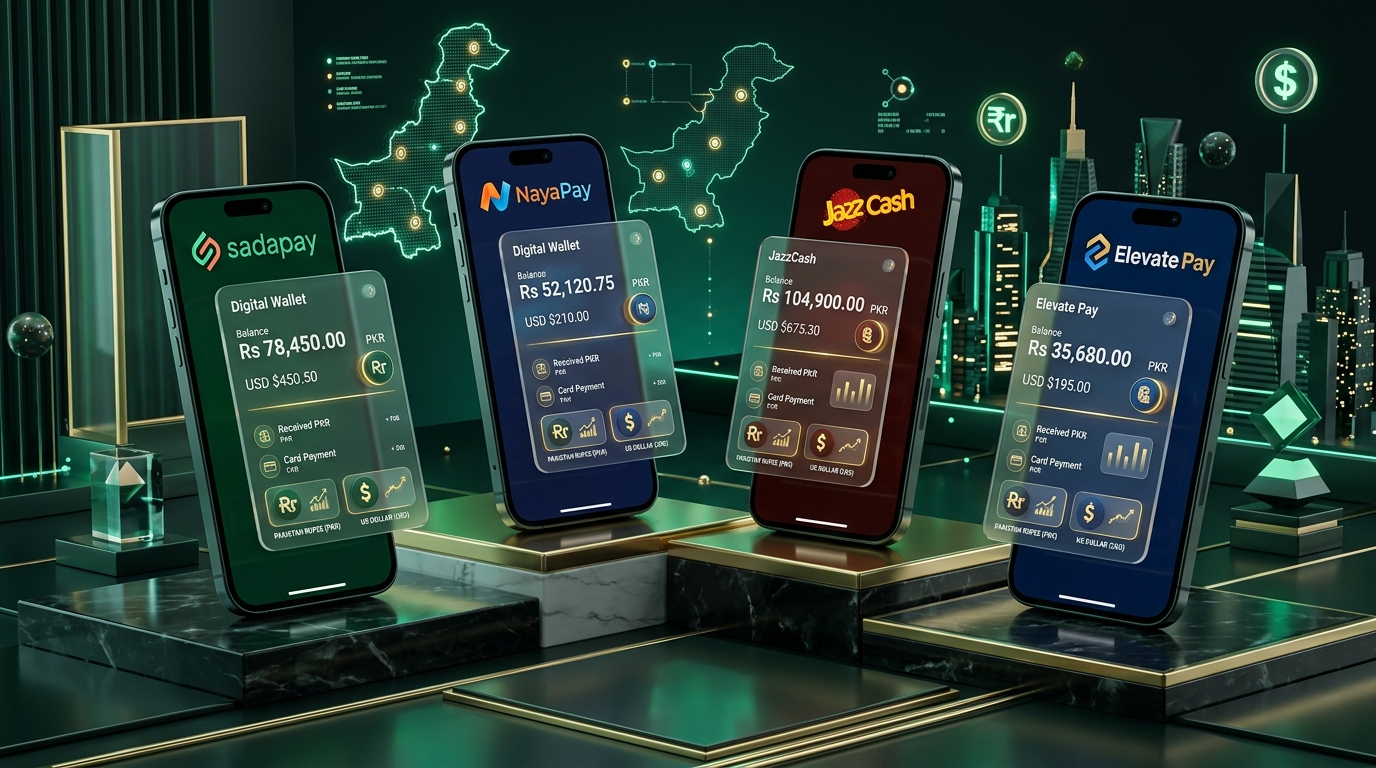
The digital banking revolution in Pakistan has transformed how citizens pay bills, shop online, send remittances, and receive international client payments. With State Bank of Pakistan’s Electronic Money Institution (EMI) licenses and Raast instant payment rails, modern fintech apps have largely replaced cumbersome branch visits.
In this comprehensive comparison, we break down the Top 10 Digital Wallets and Fintech Apps in Pakistan for 2026 based on international transaction success rates, ATM withdrawal fees, user experience, and daily limits.
1. SadaPay (SadaBiz) – Best for Freelancers & International Cards
SadaPay offers a sleek Mastercard debit card that works effortlessly across global websites (Amazon, Netflix, Spotify, Steam) with digital card and business-payment features that should be checked against its current fee schedule. Its specialized SadaBiz freelancer tier allows Pakistani remote workers to generate instant payment links paid via Apple Pay and international credit cards.
2. NayaPay – Best for Daily Local Utilities & Visa Debit
NayaPay provides an EMV-compliant physical and virtual Visa debit card, seamless utility bill payments, and free Raast transfers to any Pakistani bank account.
3. Elevate Pay – Best for Direct USD US Bank Account Details
Elevate Pay provides Pakistani remote workers and freelancers with real US-based FDIC-insured bank account details (Routing & Account numbers) for seamless, low-fee ACH payments from US clients.
4. JazzCash – Largest Agent Network in Pakistan
With over 100,000+ local retail agents across Pakistan, JazzCash is the undisputed leader for cash-in and cash-out accessibility in every city and rural district.
5. Easypaisa – Pioneer of Mobile Financial Services
Pakistan’s first mobile wallet, offering comprehensive micro-loans, insurance products, savings goals, and mobile top-ups.
6. Payoneer – Standard for Marketplace Freelancers
The primary global payment solution for Pakistani freelancers on Upwork, Fiverr, and Amazon, with direct bank withdrawals.
7. Finja – Best for SMEs & Digital Payroll
Specialized fintech platform for small business invoicing, digital credit, and automated employee payroll distribution.
8. Tag – Digital Neo-Banking Solution
Features instant P2P payments and corporate virtual expense cards.
9. Zindigi (by JS Bank) – Best for Gen-Z & Stock Investments
Modern digital banking app offering direct trading in Pakistan Stock Exchange (PSX) and mutual funds alongside digital Mastercard debit cards.
10. Alfa (by Bank Alfalah) – Best Digital Hybrid Banking
Comprehensive digital wallet backed by one of Pakistan’s premier commercial banks, offering consumer loans and digital credit cards.
Official Sources and Verification
Banking, tax, account eligibility and payment rules can change. Verify important decisions against the current first-party guidance:
- State Bank of Pakistan freelancer account framework
- SBP 2026 facilitation update for IT companies and freelancers
- Federal Board of Revenue Active Taxpayer List
- Pakistan Software Export Board membership benefits
Sources reviewed September 22, 2026. This article provides general information and is not individualized financial or tax advice.
How to compare wallets without relying on a “best” label
Confirm whether the provider is a bank, microfinance bank, Electronic Money Institution or cross-border payment company; these are not interchangeable legal categories. Start with the State Bank of Pakistan’s regulated-institutions directory.
Then test the exact use case: local bills, Raast transfers, international marketplace payouts, card purchases or business collections. Compare total conversion cost, withdrawal fees, account limits, dispute support and the name shown to a sender. Product availability and limits can change, so use the provider’s live schedule of charges rather than numbers copied into an old comparison.
For a freelancer, run one small payment before moving a major client. Keep invoices and transaction records, and never accept money on behalf of an unknown third party.
Related Guides
Choose by payment scenario
- Everyday local payments: compare Raast support, bill categories, cash-in/cash-out access and account limits.
- Freelance receipts: verify whether the sender or marketplace supports the route and how export proceeds are documented.
- International card spending: inspect foreign-currency conversion, card controls and merchant restrictions.
- Business collections: check merchant onboarding, settlement schedule, API support and dispute handling.
Keep at least one backup route for time-sensitive client payments. A good interface is useful, but regulatory status, support and the final amount received are more important.
Security check: enable biometric/PIN protection, review device sessions and contact the provider immediately when a SIM or phone is lost.
Use official support channels for disputed or unauthorised transactions.