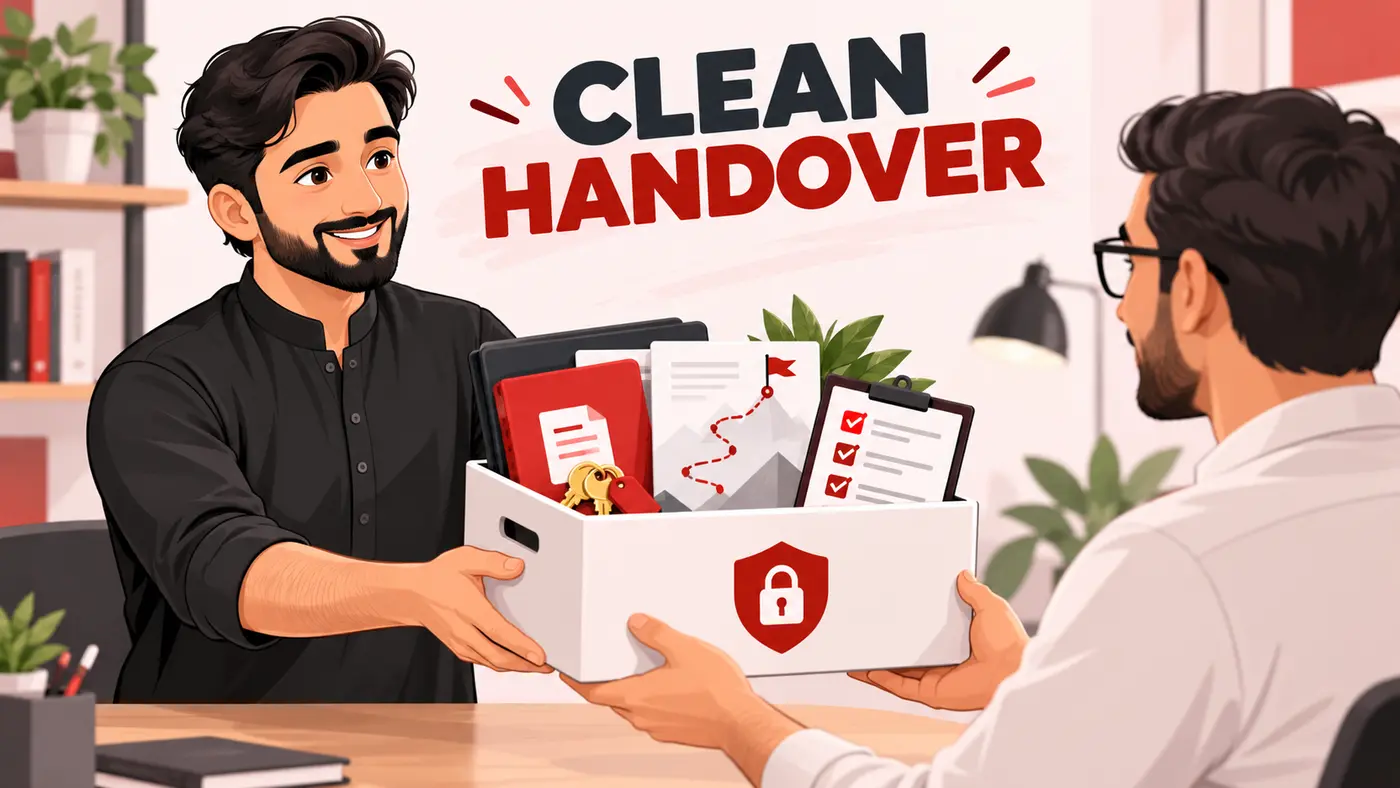
Direct answer: SEO offboarding should leave the client able to operate safely without you. Reconcile the agreement, freeze the final work state, transfer client-owned assets, document unfinished risks, remove access in the correct direction, deliver a measurement baseline and record acceptance. Do not delete data, revoke the client or hold essential credentials hostage.
Start with the exit type
The process changes when a project is complete, a retainer ends normally, the client pauses, another agency takes over or the relationship ends abruptly. Record the effective date, remaining obligations, final invoice or platform order status and the person authorized to accept the handover.
The six offboarding workstreams
| Workstream | Outcome |
|---|---|
| Commercial | Scope and final obligations reconciled |
| Access | Correct owners retain control |
| Assets | Client files organized and transferred |
| Technical state | Current implementation documented |
| Measurement | Baseline and limitations preserved |
| Continuity | Next actions and risks are understandable |
1. Reconcile scope and open work
- Completed and accepted deliverables.
- Work in progress and its usable state.
- Client-blocked items.
- Deferred recommendations.
- Subscriptions or placements with renewal dates.
- Final invoice, order or milestone status.
Do not rush to finish unapproved extras. Separate what the agreement requires from optional continuation work. On Fiverr, keep delivery and order communication on the platform and follow the current order process.
2. Build an access register
List every system touched: CMS, hosting, domain/DNS, Search Console, Analytics, Tag Manager, business profiles, CDN, rank tracker, crawl tools, shared drives and project management. For each, record the owner, your role, client administrator and removal action.
Never send passwords in a report. Transfer ownership through the platform’s user-management features or a secure password manager. Confirm the client has a tested administrator before removing your own account.
3. Separate client-owned and agency-owned assets
| Client-owned | Usually transferable |
|---|---|
| Site content and approved briefs | Yes |
| Client analytics and Search Console data | Yes, through account access |
| Custom reports created for the engagement | As agreed |
| Agency-wide templates and internal SOPs | Only if contract includes them |
| Third-party licensed software | Subject to license |
| Raw credentials | No; transfer user access securely |
Check the contract and platform terms for intellectual-property transfer. This guide is operational, not legal advice.
4. Create the final technical state document
- Preferred domain and canonical format.
- Sitemap and robots locations.
- SEO plugin and material settings.
- Redirect ownership and active rules.
- Structured-data implementation.
- Known crawl/indexation issues.
- Scheduled content and publishing dates.
- Recent migrations or experiments.
- Backup and rollback location where authorized.
Include exact URLs and dates. Label recommendations that were not implemented so the next provider does not mistake them for completed changes.
5. Preserve a measurement baseline
Export or screenshot the agreed reporting period and definitions: organic segments, key events, priority pages and query groups. Record material tracking or attribution changes. Explain data-retention limits and what remains available after your access is removed.
Use the SEO KPI guide to keep definitions consistent.
6. Deliver a 30-day continuity plan
- Critical security or access actions.
- Items that could break if subscriptions expire.
- Publishing and deployment events already scheduled.
- Top unresolved technical risks.
- Content or link tasks awaiting approval.
- Recommended monitoring dates.
- Owner for each action.
Removing access safely
Use a two-person confirmation where possible: the client administrator verifies access, then you remove your user and API tokens. Revoke temporary accounts, application passwords and shared links you created. Do not remove client-owned users or delete historical data unless the authorized owner explicitly requests a lawful deletion and the impact is understood.
Agency-to-agency handover
Share facts, not commentary about the relationship. Offer a limited transition call with an agenda. Explain unusual architecture, priority decisions and known failure modes. The incoming provider may choose a different strategy; your task is to make the existing state reproducible.
Final handover package
- One-page executive status.
- Access register without passwords.
- Asset index with locations.
- Technical state and redirect inventory.
- Latest approved roadmap and backlog.
- Measurement baseline and definitions.
- Outstanding risks and dependencies.
- Support window and final contact route.
Common mistakes
- Removing your account before the client confirms admin access.
- Transferring passwords through email or chat.
- Deleting dashboards or project history.
- Leaving paid tools billing the wrong party.
- Hiding unfinished work.
- Handing over raw exports without explanations.
- Keeping scheduled changes undocumented.
- Continuing informal support with no boundary.
Acceptance checklist
- Client confirms receipt of files.
- Client tests administrator access.
- Ownership transfers are accepted.
- Final status and open risks are acknowledged.
- Your users and tokens are removed.
- Billing and renewals are reassigned.
- Support end date is recorded.
- A dated archive is retained under the agreement.
Frequently asked questions
Should I remove access immediately?
Only after the client confirms a working administrator, unless security or contract terms require another controlled action.
Can I keep portfolio screenshots?
Only when the agreement and confidentiality permissions allow it. Remove sensitive information and obtain approval where required.
What if the client does not respond?
Follow the contract or platform process, document attempts and avoid destructive changes. Keep a clear record of the handover package.
Should I provide future recommendations?
Yes, as a prioritized continuity list, while making clear which items were not included or implemented.
Conclusion
Professional offboarding protects the client, your reputation and the value of completed SEO work. Transfer ownership, document reality, remove access safely and leave a prioritized path forward.
Reference: Fiverr order-management guidance.
Need help applying this?
Get a practical review focused on the issue, evidence and next actions.
Contact Shahzaib